THE_STRIP 3 Profiles: The One Minute That Makes AUTO-MIX Nail Your Mix
AUTO-MIX in THE_STRIP 3 sets up, unmasks, pans and balances a whole session with one button, and every one of those decisions starts from each track's profile. Here's how to check the profiles, find the closest fit for any instrument by typing its name, and build your own profile from a reference track in about a minute.
You press auto-mix. The mix comes back clean, levelled, balanced — and it still isn't your song. The vocoder fights the synths. The master sounds generic.
It's almost never the processing. It's the brief: nobody told the mix what each track is for.
So I made that brief visible in THE_STRIP 3 — and put you in charge of it.
Every instance carries a profile, and AUTO-MIX reads all of them before it moves a single fader. Checking them takes a minute. Watch it, then read the short version below.
The Short Version
- Profiles tell AUTO-MIX what every track is: lead or backing, track or bus, centred or wide.
- 81 factory profiles, from VOICE and DRUMS to 2-TRACK and MIX.
- No profile with the right name? Type the instrument and take the closest fit.
- Build your own from up to eight reference files, or from anything your computer plays, captured with the free THE_BRIDGE.
What Is a Profile in THE_STRIP 3?
It's the answer to one question: what is this track, and what's its job?
| The profile decides… | …so AUTO-MIX knows |
|---|---|
| Its family group | Whether it's levelled with the VOICE, DRUMS, GUITAR or SYNTH section |
| Its rank in UNMASK | Who steps back for whom, and where the carves go |
| Track, bus or master | Whether it plays in the mix or glues what's below it |
| Its place on the stage | Leads and bass stay centred; doubles and backings go wide |
A vocoder tagged VOCAL CHOPS gets levelled with the synths. The same vocoder tagged BACKING VOCALS (MALE) goes wide and steps back behind the lead. Same audio, different mix.
How Do I Check the Profiles Before AUTO-MIX?
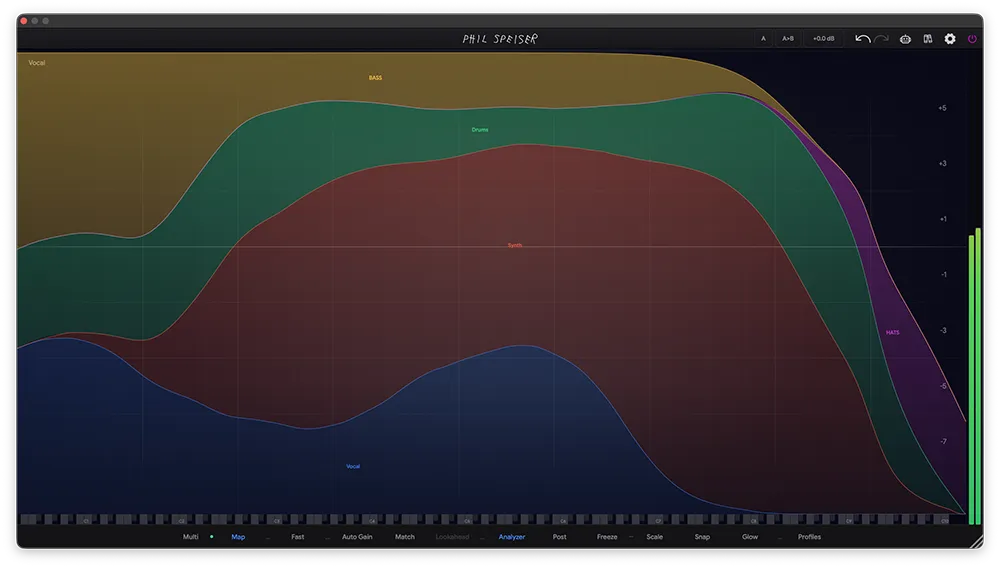
I dragged THE_STRIP 3 onto every stem and the master, then pressed M.
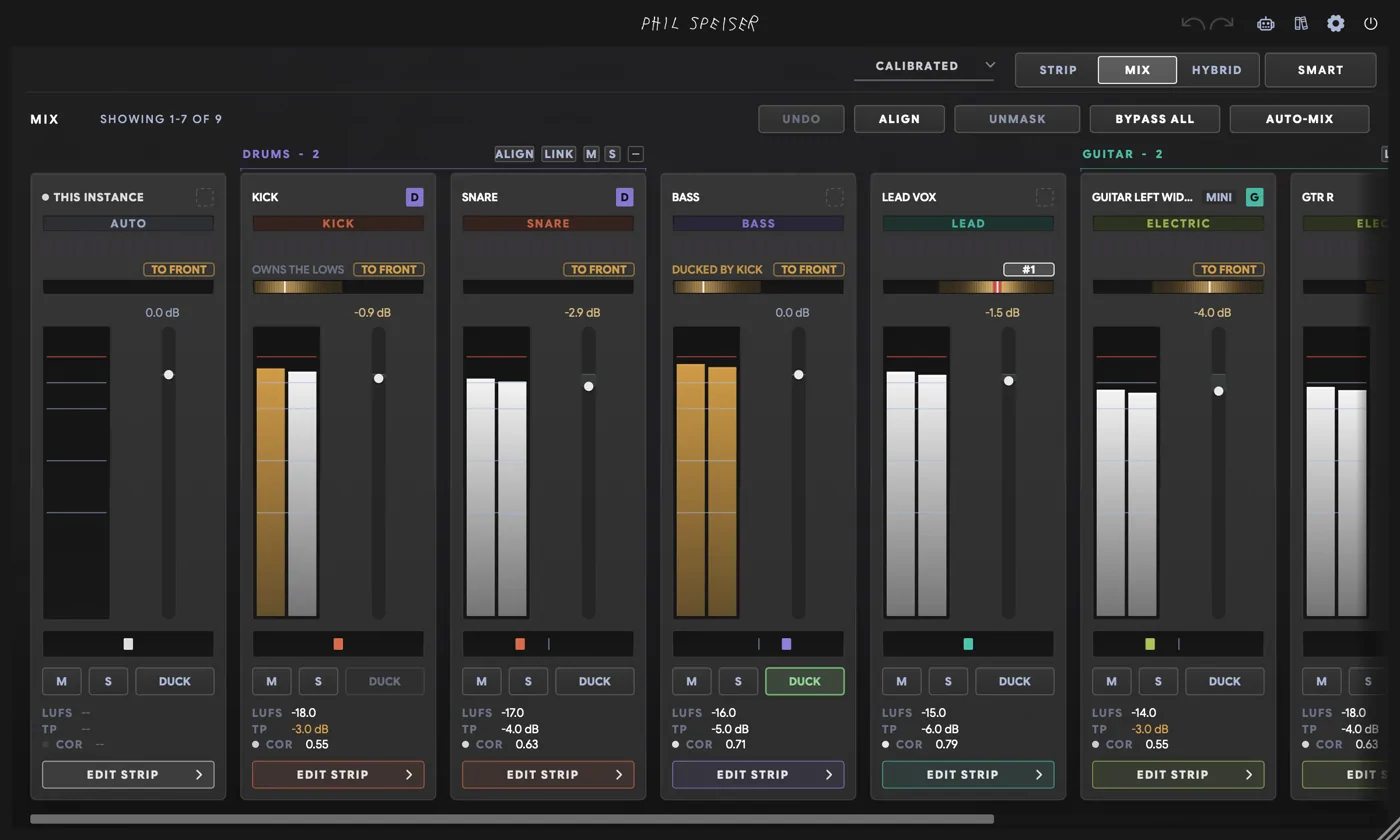
Every instance is a card with a type chip, already grouped by family. The strip got there from your track names and from listening — a very good guess, but still a guess. It hears the sound; only you know what the part is meant to do.
So walk the cards once and fix what's off: a strummed guitar that's really fingerpicked, a "Beat" track that needs the R&B bed instead of the pop one.
What If No Profile Matches My Instrument?
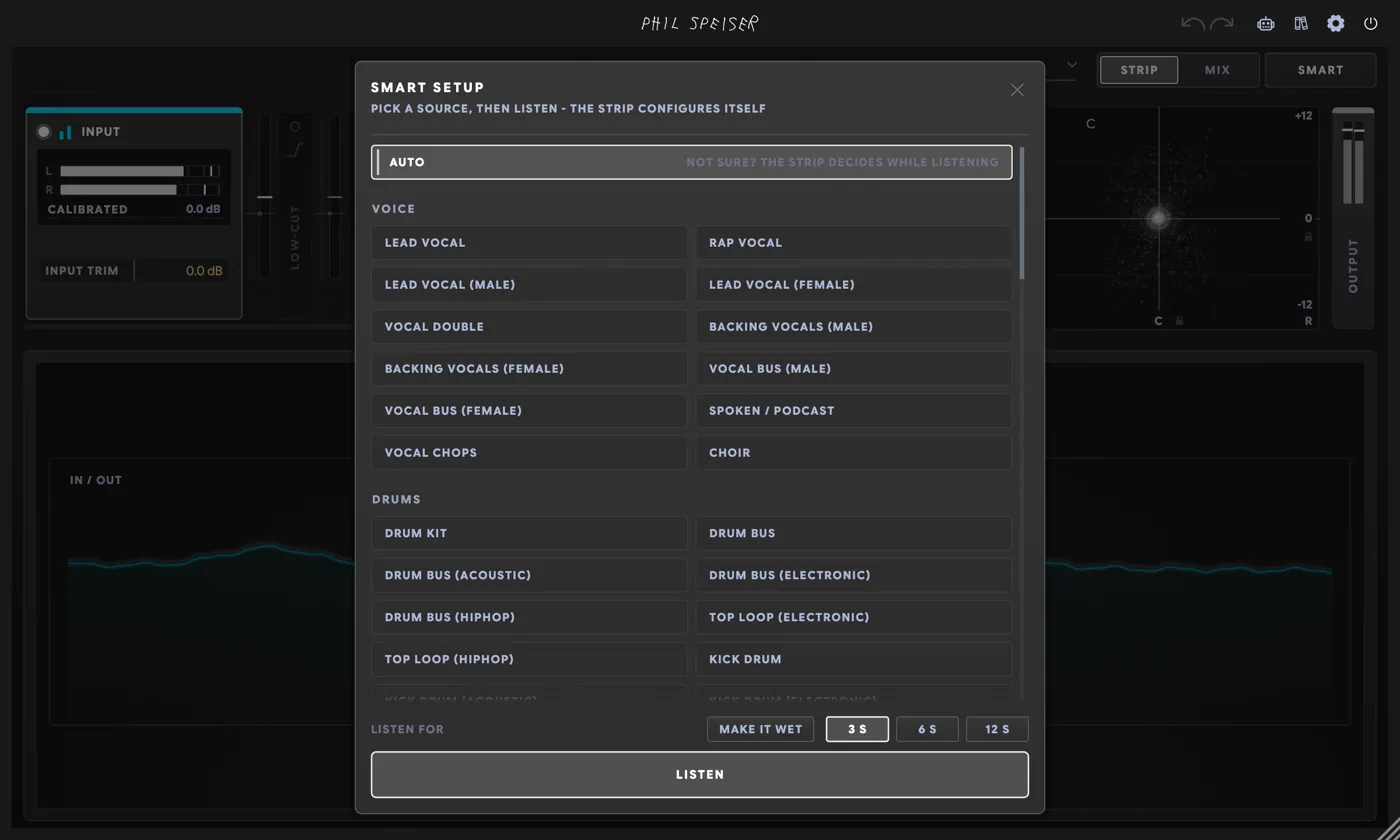
My vocoder sat in the SYNTH group as VOCAL CHOPS. There's no vocoder among the 81 profiles — so I clicked the chip and just typed.
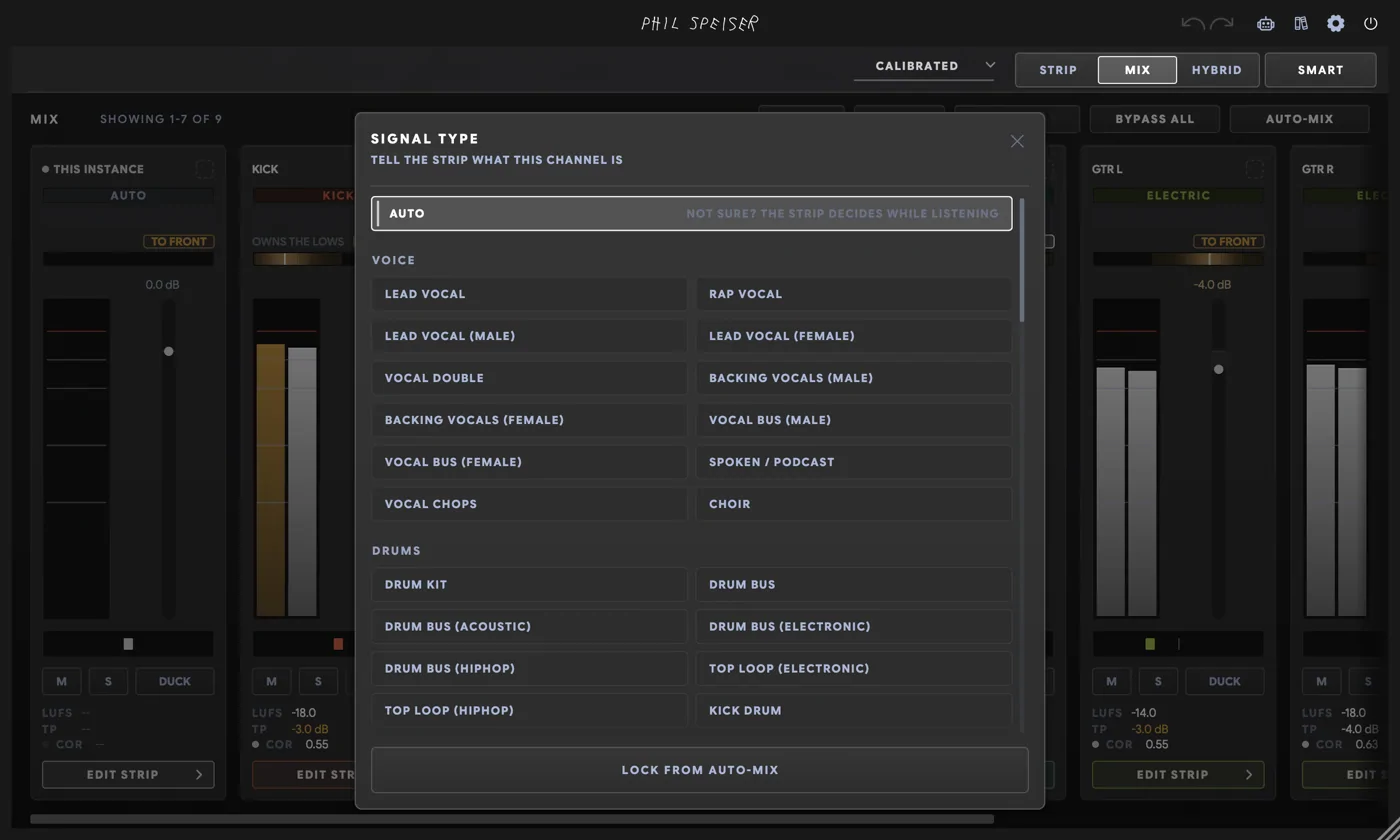
No text field to click into, and nothing is called "vocoder" — so THE_STRIP 3 reads the word like a track name and offers the closest fits. BACKING VOCALS (MALE) was exactly what I had in mind.
Same for ukulele (both acoustic guitars), harp, juno, jazz — and for instrument words in German, French, Spanish, Italian and Portuguese.
How Do I Build My Own Profile From a Reference Track?
The factory profiles are my starting points. But this was an R&B song, and I wanted the master to know that.
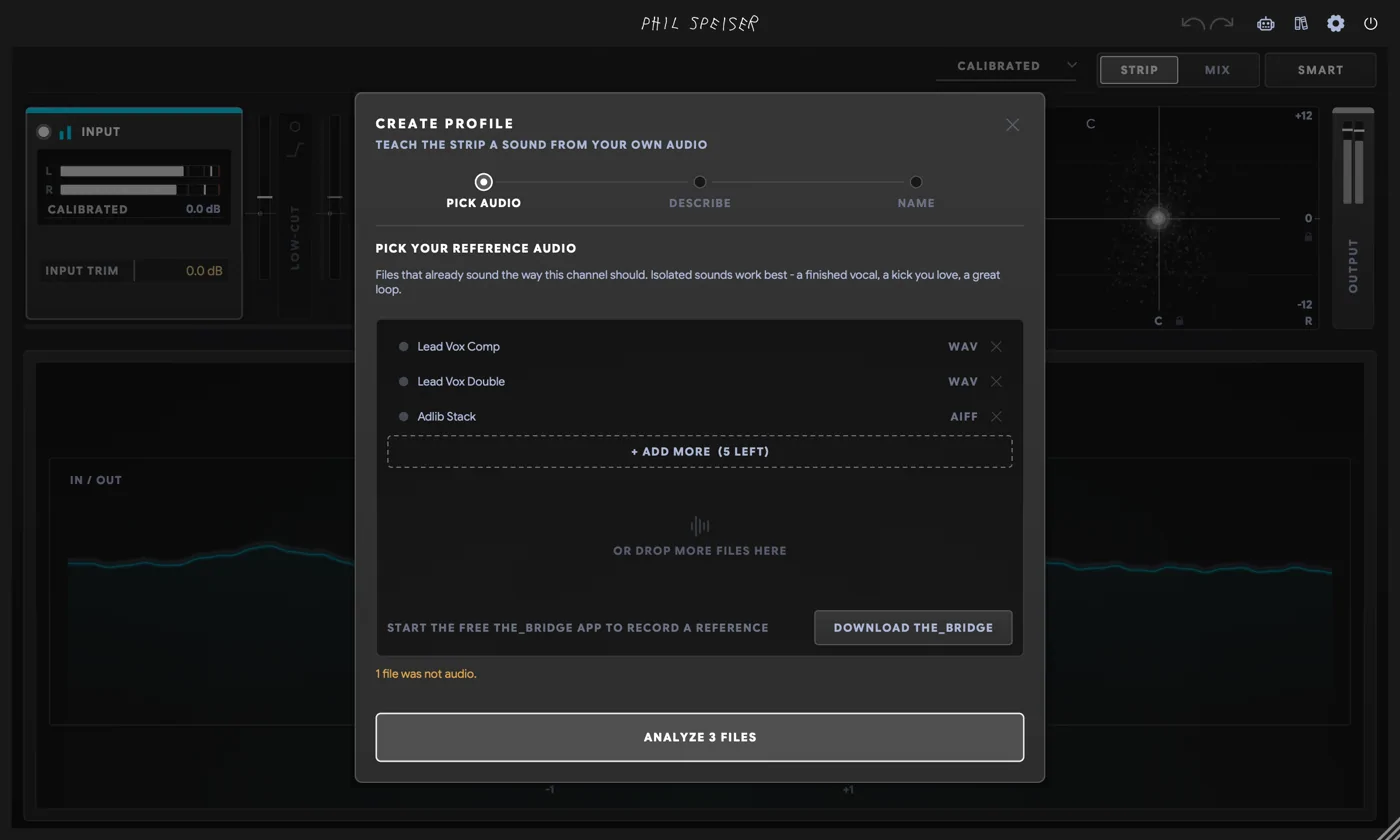
On the master card, open the type picker and choose + CREATE PROFILE.
Drop in up to eight files — or, when the sound you want isn't on your drive, record it with THE_BRIDGE.
Recording a Reference With THE_BRIDGE
THE_BRIDGE is my free companion app for macOS and Windows. Its RECORD tab captures your mic or SYSTEM AUDIO: whatever your computer is playing, in any app, with no routing and no virtual cables.
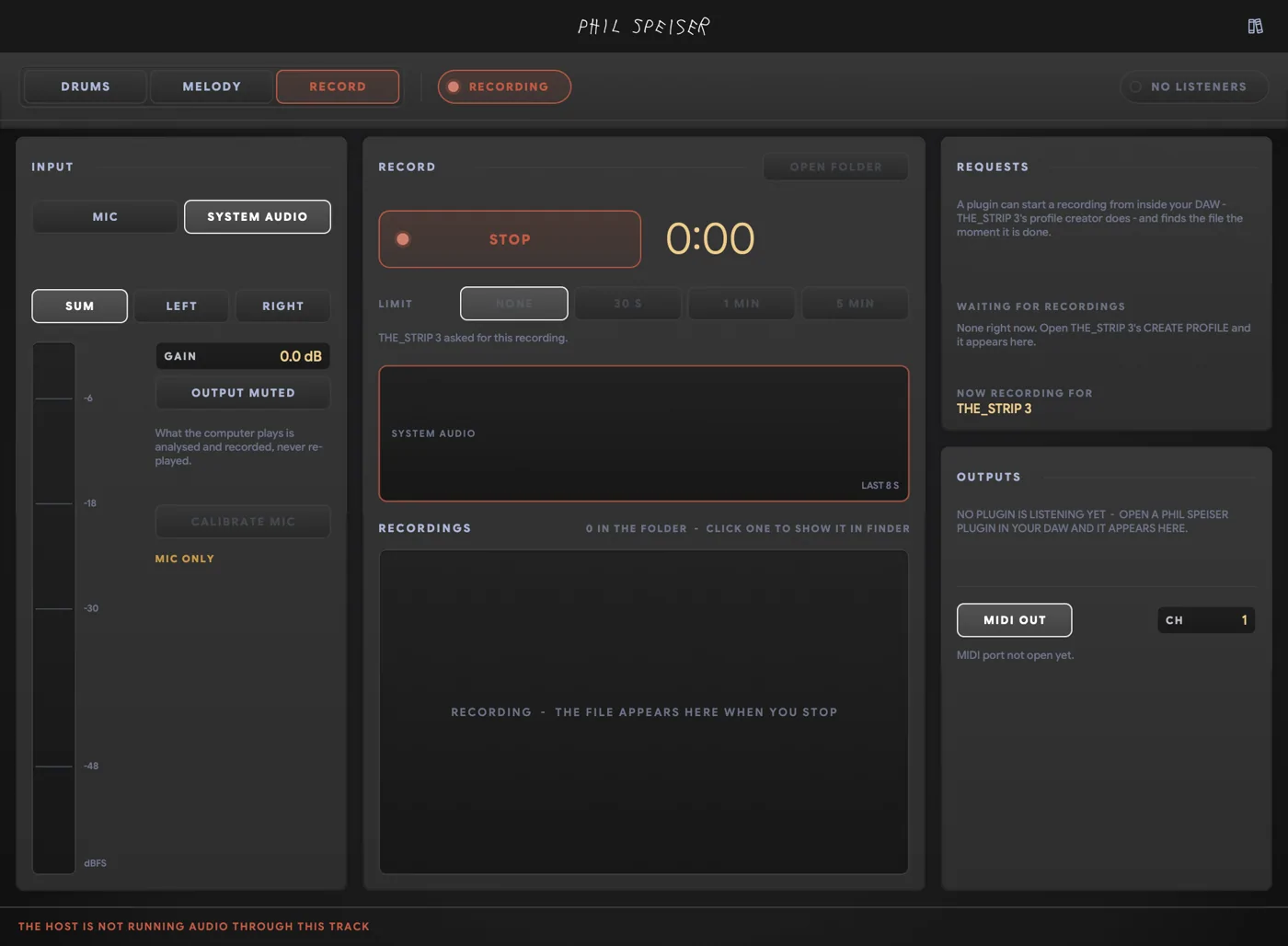
THE_STRIP 3 appears right there under REQUESTS, and the recording it asked for lands straight back in CREATE PROFILE when you stop. I played a royalty-free R&B instrumental in my browser and hit record — stop the moment you've got enough.
Describe It, Name It, Use It
Then you tell it what the sound is. The strip shows what it heard — tone, dynamics, stereo image — and you add the intent in your own words. Mine was three: mix bus RNB.
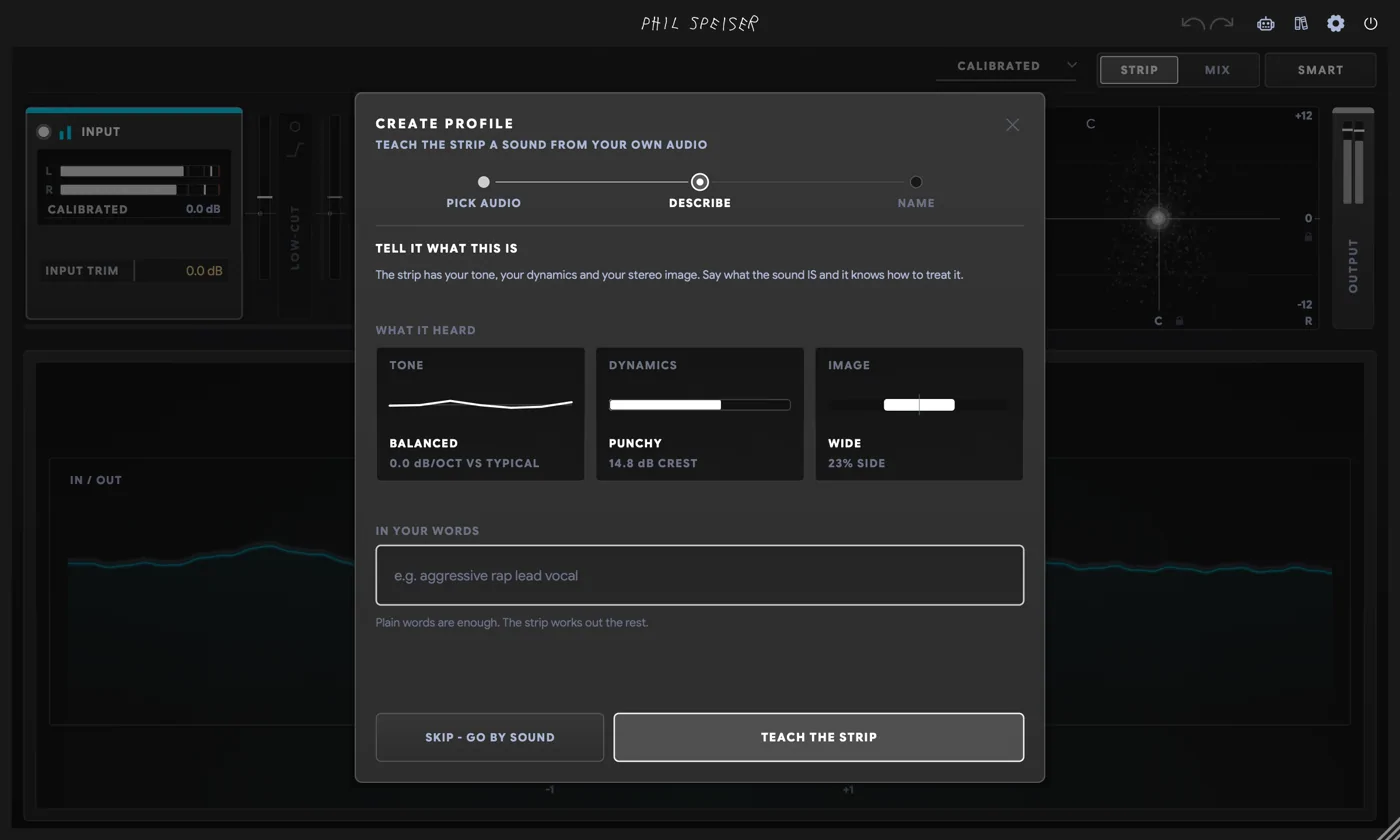
Name it, and it's yours — on every instance, in every session, on this computer.
Drop in three or four bounces you've finished and love, and you get a master profile built from your own sound instead of a generic one.
Why Does My New Profile Land in the Wrong Place?
After I selected R&B MIX BUS, the master card hadn't moved to the master position.
Here's why: I'd fed it an R&B instrumental and described it as R&B, so the strip read it as a 2-TRACK INSTRUMENTAL — a backing track a vocal sits on. That's a track, ranked under the voice and carved where the voice sings. Perfect for a beat, wrong for a master.
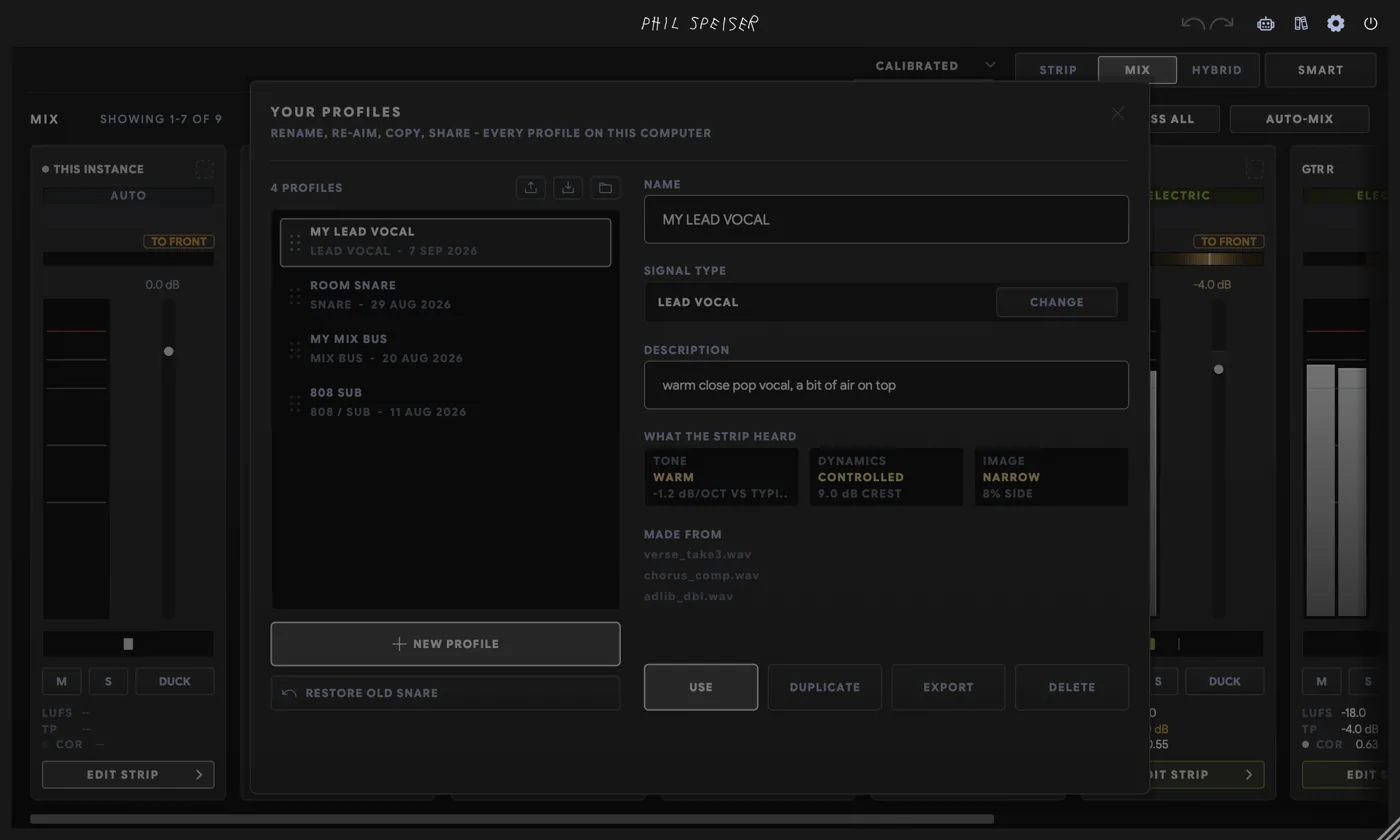
Open MANAGE, hit CHANGE, pick MIX BUS. The measurement stays, only its job changes — nothing to re-analyse. Back in the mixer, the master sits with the buses and reads R&B MIX BUS.
Then Press AUTO-MIX
Now every decision lands on the right track. The best-ranked lead keeps the centre while doubles and backings go wide. Sections like guitars or backing vocals move as one. On a vocal-plus-beat session, the vocal-to-bed ratio comes straight from the two profiles: a LEAD VOCAL sits 4 LU under a POP bed, a RAP VOCAL 1.5 LU closer.
THE_STRIP 3 then walks you through every decision in plain words, and one undo takes back the whole run.
Your 60-Second Profile Checklist
- THE_STRIP 3 on every track and the master, then M.
- Walk the type chips and confirm them.
- No matching name? Type the instrument, take the closest fit.
- Missing your sound? + CREATE PROFILE from files or THE_BRIDGE.
- Check the profile's job in MANAGE.
- AUTO-MIX.
The strip does the heavy lifting. You keep the one thing it can't know without you: what your song is supposed to be.
FAQ
What is a profile in THE_STRIP 3?
A profile tells THE_STRIP 3 what a track is and what job it has in the mix: LEAD VOCAL, BACKING VOCALS (MALE), KICK DRUM, 808, PAD, INSTRUMENTAL (R&B & SOUL), MIX BUS and so on. THE_STRIP 3 ships with 81 factory profiles in categories from VOICE and DRUMS to 2-TRACK and MIX, and you can build your own from reference audio.
Why do profiles matter so much for THE_STRIP 3's AUTO-MIX?
Because every AUTO-MIX decision starts from them. The profile decides how SMART SETUP configures the strip, which family group the track joins, its place in the UNMASK pecking order, whether it's a track, a bus or the master, whether it stays centred or goes wide on the stage spread, and how it's levelled against its section and stem. A vocoder tagged as VOCAL CHOPS gets mixed with the synths; tagged as BACKING VOCALS, it goes wide and sits behind the lead.
What if THE_STRIP 3 has no profile for my instrument?
Type the instrument's name in SMART SETUP or the mixer's type picker. When no profile matches by name, THE_STRIP 3 offers the closest fits: 'vocoder' suggests VOCAL CHOPS and both BACKING VOCALS, 'ukulele' the two ACOUSTIC GTR profiles, 'harp' nylon guitar, mallets, picked acoustic and pad, 'juno' or 'serum' the synth families. Instrument words in German, French, Spanish, Italian and Portuguese work too.
How do I create a custom profile in THE_STRIP 3?
Choose + CREATE PROFILE in SMART SETUP or the mixer's type picker, drop in up to eight reference files (WAV, AIFF, FLAC, MP3 or OGG) or record one with the free THE_BRIDGE app, optionally describe the sound in words, and name it. The profile is saved machine-wide, so every instance of THE_STRIP 3 in every session can use it.
Can THE_STRIP 3 capture a reference track that's playing on my computer?
Yes, through THE_BRIDGE, Phil Speiser's free companion app for macOS and Windows. Its RECORD tab captures the mic or SYSTEM AUDIO, meaning whatever the computer plays in any app, with no routing. THE_STRIP 3's CREATE PROFILE can start that recording from inside the DAW and picks up the file when it's done. SYSTEM AUDIO on macOS needs macOS 14.2 or newer.
Why did my custom profile land in the wrong place in THE_STRIP 3's mixer?
THE_STRIP 3 interprets a new profile from its audio and your description. A reference that's a full instrumental can be read as a 2-TRACK INSTRUMENTAL profile, which is a track that sits under a vocal, not a master. Open MANAGE on YOUR PROFILES and use CHANGE to set the right type, such as MIX BUS. The measurement is kept, so nothing needs re-analysing, and the card moves right of the split rule with the buses and master.
Can I share THE_STRIP 3 profiles or move them to another computer?
Yes. In MANAGE you can EXPORT one profile or EXPORT ALL to a .stripprofiles bundle, and IMPORT a bundle by dropping it on the library. An imported profile with the same identity updates in place; a name clash is kept under a new name and never overwrites anything.